As power systems, oil and gas infrastructure, pipelines, railways, and other critical assets become increasingly connected, the demand for continuous long-distance monitoring continues to grow.
Distributed Fiber Optic Sensing, or DFOS, is becoming an important technology for these applications because it can transform a single optical fiber into thousands of virtual sensing points.
Depending on the physical parameter being measured and the optical scattering mechanism used, distributed fiber optic sensing can generally be divided into three major categories:
Although all three technologies use optical fiber as the sensing medium, they observe very different physical phenomena.
A simple way to understand them is:
DAS tells you where an event is happening.
DTS tells you where the temperature is changing.
DSS tells you where the structure is deforming.
In a conventional fiber optic communication system, optical fiber is mainly used to transmit information.
In a distributed fiber optic sensing system, however, the fiber itself also becomes a continuous sensor.
When a laser pulse travels through an optical fiber, interactions between the light and the fiber material generate different types of backscattered light.
The three most important scattering mechanisms are:
These signals are influenced by environmental and mechanical conditions such as:
By analyzing the intensity, frequency, or phase of the backscattered light, while also measuring the travel time of the optical signal, the sensing system can determine both:
What is happening
and
Where it is happening
As a result, a single optical fiber can be converted into thousands of continuously distributed sensing points.
This is one of the major differences between distributed fiber optic sensing and conventional point sensors such as thermometers, accelerometers, or strain gauges.
DTS stands for Distributed Temperature Sensing.
Its primary purpose is to continuously measure temperature along the entire length of an optical fiber.
The typical output can be described as:
Temperature × Distance
For example, if an optical fiber is installed along a 10 km power cable, a DTS system can continuously measure the temperature profile along the entire cable route rather than monitoring only several isolated points.
Most DTS systems are based on Raman scattering.
When a laser pulse travels through an optical fiber, Raman scattering produces both:
The Anti-Stokes signal is particularly sensitive to temperature.
By analyzing the relationship between Stokes and Anti-Stokes backscattered light, the system can calculate the temperature at different positions along the fiber.
At the same time, the return time of the optical signal is used to determine the position of each measurement.
In simple terms:
Raman scattering → Temperature information
Optical travel time → Location information
The final result is a continuous temperature profile along the optical fiber.
DTS is particularly suitable for applications requiring continuous temperature monitoring over long distances.
Typical applications include:
High-voltage cables, underground cables, cable tunnels, and cable joints may experience abnormal heating caused by:
Traditional temperature sensors normally monitor only a limited number of locations.
DTS, on the other hand, can continuously monitor the entire cable route and identify abnormal hotspots.
Temperature is an important indicator of equipment condition in large-scale energy storage installations.
Optical fiber can be deployed along cables, equipment zones, and other critical areas to provide continuous temperature monitoring and hotspot localization.
DTS can detect abnormal temperature increases in:
This makes it useful for early fire detection and thermal risk monitoring.
When optical fiber is installed along a wellbore, DTS can generate a continuous temperature profile at different depths.
This information can support well condition monitoring and production analysis.
DTS therefore mainly answers the question:
Where is the temperature changing?
DAS stands for Distributed Acoustic Sensing.
Unlike DTS, DAS focuses primarily on:
DAS commonly relies on coherent Rayleigh scattering and technologies such as φ-OTDR.
When vibration affects the optical fiber, the fiber experiences extremely small mechanical deformation.
This deformation changes the phase of the Rayleigh backscattered signal.
By analyzing these phase variations, the DAS interrogator can detect and locate vibration events.
For example:
Excavation activity
↓
Ground vibration
↓
Microscopic strain in the optical fiber
↓
Rayleigh scattering phase change
↓
DAS detects the vibration
↓
Event location is calculated
In this way, tens of kilometers of optical fiber can effectively become a continuous acoustic and vibration sensing array.
The real value of DAS is not simply detecting vibration.
For critical infrastructure, the more important question is:
What caused the vibration?
A pipeline monitoring system, for example, may detect signals generated by:
As DAS sensitivity increases, the amount of detected data can also increase significantly.
If every vibration signal becomes an alarm, the system may generate too many unnecessary alerts.
For this reason, modern DAS systems increasingly combine sensing hardware with:
Event analysis
and
AI-based classification
A complete DAS architecture can therefore be represented as:
Optical Fiber
↓
DAS Interrogator
↓
Event Analysis Server
↓
AI Event Classification
↓
Alarm and Visualization
The analysis system can help distinguish between different types of events such as:
This allows operators to focus on meaningful events rather than raw vibration data.
DAS is particularly suitable for detecting dynamic events over long distances.
DAS can help detect activities near underground pipelines, including:
This can provide early warning against third-party interference or potential pipeline threats.
Optical fiber can be installed along:
The system can detect walking, climbing, vehicles, and other intrusion-related activities.
Fiber installed along railway infrastructure can detect:
Fiber deployed along the wellbore can capture acoustic information from different depths.
This provides an additional sensing dimension for downhole monitoring and analysis.
DAS therefore mainly answers:
What is happening, and where?
DSS stands for Distributed Strain Sensing.
If DAS mainly observes dynamic events, DSS focuses more on how structures change over time.
DSS is commonly used to measure:
These changes may occur very slowly and may not generate significant sound or vibration.
For example, consider a buried pipeline located in a landslide-prone area.
The ground may move only a few millimeters per day.
There may be no obvious continuous vibration.
However, as the ground continues to move, mechanical stress and strain can gradually accumulate in the pipeline and the sensing fiber.
DSS can detect these gradual strain changes along the infrastructure.
Long-distance DSS is commonly associated with Brillouin scattering.
When an optical fiber experiences strain or temperature variation, the frequency of the Brillouin backscattered signal changes.
This phenomenon is usually described as the:
Brillouin Frequency Shift
By measuring this frequency shift at different positions, the system can calculate distributed strain along the fiber.
Common technologies include:
These technologies are widely used for long-distance structural monitoring.
An important consideration is that Brillouin frequency shift is affected by both:
Strain
and
Temperature
Therefore, accurate strain monitoring often requires temperature compensation.
This is one reason why DSS and DTS can be highly complementary in engineering applications.
DSS is mainly used for structural condition and geotechnical monitoring.
DSS can detect long-term strain caused by:
Optical fiber can be installed along slopes or underground structures to monitor gradual ground movement.
DSS can help identify long-term deformation trends in large civil structures.
Distributed strain sensing can support structural integrity assessment across large assets.
DSS therefore mainly answers:
Where is the structure deforming?
| Technology | DAS | DTS | DSS |
|---|---|---|---|
| Full Name | Distributed Acoustic Sensing | Distributed Temperature Sensing | Distributed Strain Sensing |
| Main Measurement | Acoustic, vibration, dynamic strain | Temperature | Static / quasi-static strain |
| Typical Scattering Mechanism | Rayleigh | Raman | Brillouin |
| Common Technology | φ-OTDR | Raman OTDR | BOTDA / BOTDR |
| Typical Output | Event × Distance × Time | Temperature × Distance | Strain × Distance |
| Main Purpose | Dynamic event detection | Continuous temperature monitoring | Long-term deformation monitoring |
| Typical Applications | Pipelines, railways, perimeter security, wells | Power cables, tunnels, energy storage, wells | Pipelines, slopes, bridges, tunnels |
| Core Question | What is happening? | Where is the temperature abnormal? | Where is deformation occurring? |
The three technologies are not direct replacements for one another.
They measure fundamentally different physical parameters.
For large infrastructure, relying on only one physical parameter may not provide enough information to understand the actual condition of the asset.
Consider a long-distance oil or gas pipeline.
An excavator approaches the pipeline.
DAS detects:
Excavation-related vibration
and identifies the location:
12.4 km
At the same time:
DTS: Temperature remains normal
DSS: Structural strain remains normal
In this case, DAS provides the earliest indication of the external event.
After prolonged rainfall, the ground begins to move gradually.
There may be no strong continuous vibration.
However, DSS detects:
Increasing strain
between:
18.7 km and 18.9 km
This may indicate that the pipeline is being exposed to increasing mechanical stress.
DTS may still show normal temperature.
DAS may only detect occasional short-duration events.
In this situation, DSS provides the most useful information.
A pipeline leak may generate an acoustic signature.
DAS may detect:
Leak-related acoustic activity
At the same time, escaping gas or liquid may create a local thermal anomaly.
DTS may detect:
Local temperature change
If the leak is related to structural damage, DSS may also identify abnormal strain.
The three technologies therefore provide different layers of information:
DAS — Event
DTS — Temperature
DSS — Structural Integrity
The future of distributed fiber optic sensing is not simply about increasing sensor sensitivity.
A more important direction is creating a more complete understanding of infrastructure condition.
A multi-physics distributed fiber optic monitoring architecture may include:
Optical Fiber
↓
DAS + DTS + DSS
↓
Acoustic + Temperature + Strain
↓
Event Analysis and AI
↓
Alarm + Visualization + Asset Health
Instead of simply telling the operator:
“An abnormal signal was detected,”
the monitoring platform can gradually answer more useful questions:
Where did it happen?
What happened?
Is the temperature abnormal?
Is the structure deforming?
Does the event require action?
This approach can provide significantly more operational context for applications such as:
HERTZINNO develops distributed fiber optic sensing solutions for industrial and critical infrastructure monitoring.
The HERTZINNO HZ-iDAS series is designed for long-distance acoustic, vibration, and event monitoring.
Typical applications include:
When combined with event analysis and classification algorithms, DAS can provide not only vibration detection but also more meaningful event identification.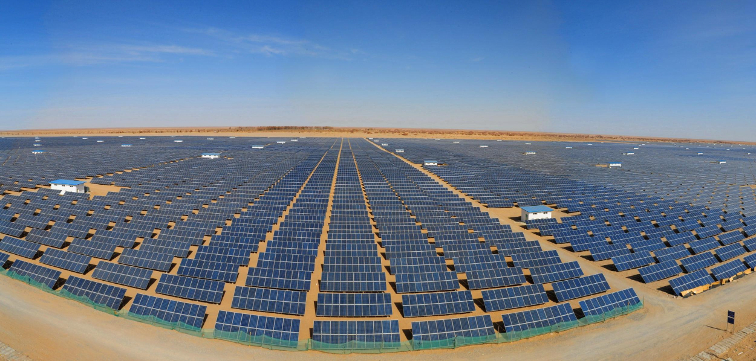

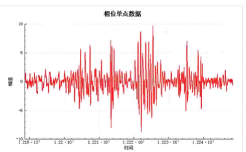
The HERTZINNO HZ-DTS series is designed for continuous distributed temperature monitoring.
Typical applications include:
By combining DAS and DTS, operators can monitor both dynamic events and thermal conditions along the same infrastructure.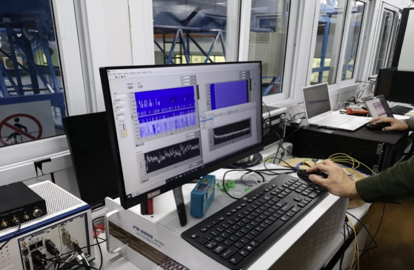
Further integration with Brillouin-based BOTDA or BOTDR technology can extend the system toward:
DAS + DTS + DSS
creating a multi-physics distributed fiber optic sensing architecture.
This allows acoustic, temperature, and strain information to complement and verify each other.
The correct technology depends first on one question:
What do you actually need to monitor?
If your main concern is:
Choose:
DTS
Typical applications:
If your main concern is:
Choose:
DAS
Typical applications:
If your main concern is:
Choose:
DSS
Typical applications:
If a more complete understanding of infrastructure condition is required, multiple technologies can be combined:
DAS + DTS
or
DAS + DTS + DSS
to create a multi-physics distributed fiber optic monitoring system.
DAS, DTS, and DSS all belong to the field of distributed fiber optic sensing, but they monitor different aspects of the physical world.
DAS detects dynamic events.
DTS detects temperature changes.
DSS detects structural deformation.
Rayleigh, Raman, and Brillouin scattering give optical fiber the ability to sense vibration, temperature, and strain over long distances.
For modern infrastructure, the real value is increasingly moving beyond simply detecting a signal.
The next step is to combine multiple sensing technologies to understand:
Where an event occurred
What caused it
Whether temperature is changing
Whether the structure is deforming
and ultimately:
Whether action is required
As distributed sensing, AI event analysis, and multi-sensor data fusion continue to develop, optical fiber is evolving from a communication medium into a continuous sensing network for critical infrastructure.


